
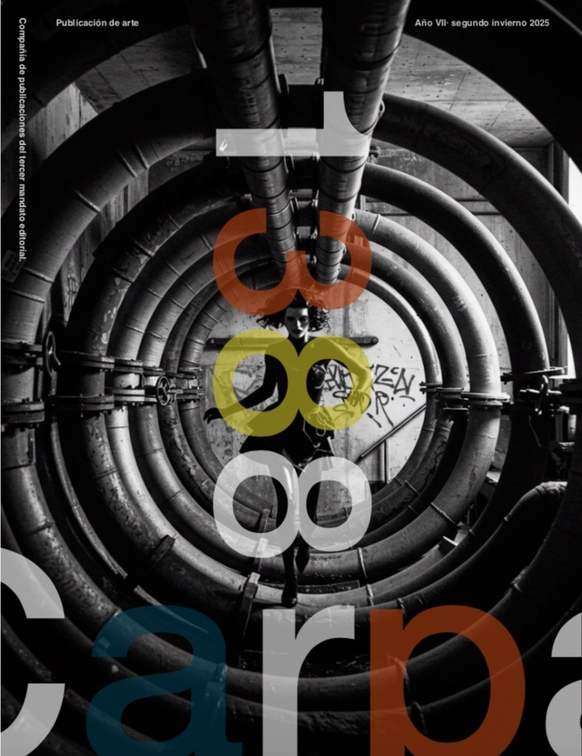
In reality, this introduction could be considered superfluous in this volume. What was written in our Carpa 1888, in those final days of the series, remains valid, but our readers have already verified that it was not its conclusion, and since then, Carpa 708, the definitive end of the 1800s, has been published, although I am not so sure of the validity of our assertion. Doña Carmen's artistic work is an inexhaustible source for countless theses and artistic works, and the study of the material deposited in the trunk may still uncover one of the marvelous surprises that the artist concealed within her chaotic disarray, from which she once again demands our attention.
As mentioned in those pages, this will be the first monograph dedicated to the figure of "Nene" outside of the most academic circles, and dedicated to disseminating, among the general public, the fascinating photographic work of the photographer of Carmencita and her depraved court. An artist seduced by the force of evil, who journeyed from decidedly non-poetic and avant-garde positions to surrender herself without reservation to the most perverse darkness, which, as never before, threatened this planet, as we presented in that short final section of “1888.” When we submitted it, we weren't entirely sure if our request to develop this volume would be granted. Feedback from our readers had been very positive, and only the rigidity—more like ostracism than censorship—of our governing bodies against this culture made us hesitate, at first, to submit our request. Surprisingly, the response arrived sooner than usual, accepting our project without revisions and even including favorable comments from the Crown, the government, and our parliament. As stated in the response, our institutions had long considered rescuing from oblivion the figures of art, thought, and science of the ancient, cursed kingdom and finally granting them the recognition they deserved for their contribution to the development of the planet. The time had come to erase the cursed darkness of their agonizing end and restore their importance in the course of our history. By the time this issue of Carpa is published, many of the editorial teams from the various administrations will have already edited and presented similar publications dedicated to other cultural figures from that kingdom. Initially, before receiving the explicit authorization from our administration, we designed an edition based almost word for word on the structure of that publication, with the aim of strengthening our request and having a functional format already approved by our readers. After the affirmative response, I convened a meeting of the entire editorial team on our terrace to discuss the possibility of creating a new project to present the work of "Nene" that would avoid what had already been presented in that previous Carpa. The content would be transferred to the servers attached to this Carpa 1388 and could easily be accessed by our readers. Leaving aside the fact that my editors usually consider these meetings a party—"The terrace was a party" is their motto—the evening was extremely productive, and as Petia proclaimed to close it: "From this moment on, we'll be filming in color, and it will be necessary to build a wonderful musical set," all this before joining Sagrario to perform a drunken version of "Volveré de entre la muerta esperanza" by Vilma Guas. From that meeting emerged this issue of Carpa, eminently visual and geared towards presenting the photographer's work from a rigorously academic and objective point of view, avoiding at all times moral judgments about her and concentrating on that powerful artistic—not poetic—work that decisively influenced the artists who emerged after the end of the war and aristocratic oppression. From the previous issue, we have only included the advertising breaks, the selection of which, as on that occasion, will be handled by Petia. Although we will maintain a biographical overview from her early days to her death during the fighting for the Fisherwomen's Bridge, we will attempt to maintain a completely new approach for this monograph. In that previous issue, it was inevitable to note or compare the similarities between her work and that of Doña Carmen, but now, outside the 1800 series, we will avoid these comparisons and focus solely on "Nene" and her world. Our readers will already know about the official addition of Tini A6RN and Basilia Villalobos to this editorial team, and how we are currently negotiating the arrival of Luisa, the one who brings joy, to this team permanently as well. Tini and Basilia have been in charge of selecting the photographs taken for the sewing workshops and commenting on these campaigns and photographs. Luisa, for her part, and through the archives of the royal household, has been essential in identifying the protagonists of these images and unraveling, for all of us and our readers, the intricacies of the ruling aristocracy during "Nene's" lifetime and the strange customs prevalent in its rigid class society. Since its fall, countless studies have attempted to understand the causes and motives of that global transformation. What these analyses have failed to unravel over all these years is not the objective of this publication, but rather to further the analysis of a society capable of producing artists like the protagonist of our special issue. |
|






One comment