Prologue to Increased Reality
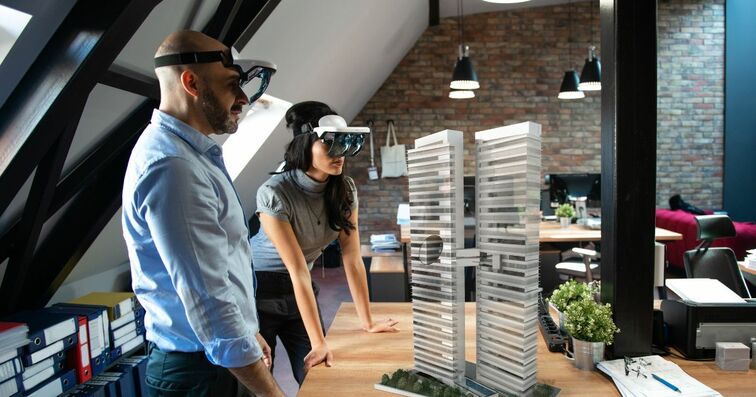
Increased the truth is an arising innovation that takes this present reality and puts virtual data on top of it. This data can be visual, hear-able or haptic. AR should be visible in many spots, from yellow first-down lines superimposed on TV pictures of American turf football to expanded guides and guides at authentic destinations. What is Increased Reality? AR innovation utilizes sensors to recognize the actual world and afterward overlay advanced data over it. This can incorporate a scope of visual, hear-able, haptic and somatosensory components. In the most straightforward structure, this is finished through cell phones, tablets and different gadgets that have cameras with programming that distinguishes markers (like signs, announcements, item names or tourist spots) and afterward superimposes 3D designs over them. It's additionally the innovation behind Pokemon Go, where clients chase after vivified characters that show up in their genuine areas, and the NFL telecasters' utilization of expanded reality to assist them with better breaking down plays. It's likewise utilized in many assembling and industry applications. Upkeep and functional proficiency: AR permits professionals to get prompt data on the best way to fix gear or machines, lessening creation margin time and supporting constant tasks. Meaning of Increased Reality The term is frequently connected with cutting edge innovation, however AR has been around in different structures for a really long time. Thomas Caudell begat the term in 1990 while planning a framework to assist Boeing laborers with envisioning confounded airplane frameworks. MIT Media Lab's Liquid Connection points Gathering exhibited the SixthSense gadget in 2009, which utilizes a projector, cell phone and mirror to show AR content on level two-layered surfaces like walls and items. All the more as of late, expanded reality has become well known through the Pokemon GO application that allows players to find and catch virtual computer game characters that show up in their regular climate. Different applications utilize a similar innovation to convey new web based business encounters, gather special client information and upgrade modern creation processes. For instance, a worker can look into support and functional manuals for any machine in their nearby area utilizing expanded reality. Kinds of Increased Reality The most well-known sort of AR includes a camera-prepared gadget that perceives items or elements with PC vision innovation, then overlays computerized data on the item. Models incorporate GPS maps, road view administrations like Google Guides and Apple ARKit and AR applications that let you place virtual furniture in your home prior to buying. Projection-based AR utilizes a projector to show 3D images that are shown over level surfaces. This incorporates expanded reality at occasions and 4D cinemas. It isn't really vivid powerful for shows that require an enormous region to work in. Utilizations of Expanded Reality AR starts with a gadget, similar to a cell phone or tablet, furnished with camera sensors and stacked with programming that perceives the client's environmental factors. It then downloads data about those environmental factors, handling the information to frame a model of the world around the client. The gadget then, at that point, overlays virtual advanced content on top of this genuine model. Projection-based AR utilizes projectors to show advanced increases on level two-layered surfaces, like walls and floors. This strategy can be utilized to establish completely vivid conditions, including multi dimensional images. Markerless AR distinguishes explicit items or elements in reality, for example, a book cover, an item name, or a milestone, and superimposes data about them on the encompassing scene. This can be utilized to assist clients with tracking down areas, like an eatery or cinema, or to design and redo items, similar to furniture and vehicles, prior to buying them. |
|